When it comes to industry growth, someone always has to take the lead and do the unglamorous groundwork.
By Eric, Foresight News
This is an English translation of the original Chinese article. Read the original here: https://a.foresightnews.pro/article/detail/96887
"Let me flip that question — where else would make more sense, other than Hong Kong?"
That's actually a fair point. Ever since Hong Kong released its virtual asset policy statement, skeptics have never gone quiet. But for investment firms looking for Web 3 opportunities with an Asian base and global reach, Hong Kong remains the obvious choice — ahead of Singapore, Japan, Korea, and Southeast Asia alike.
This conversation took place during the Hong Kong Web3 Festival which just concluded in April. Backed by the Ethereum Foundation and jointly operated by SNZ and ETHTao, the Hong Kong Ethereum Community Hub (the "Hub") held its Grand Opening & Meetup during the same week, with distinguished guests in attendance including Ethereum Co-Founder Vitalik Buterin, President of Ethereum Foundation Aya Miyaguchi, Hong Kong Legislative Council Member (Technology & Innovation) HON Duncan Chiu, Sharplink CEO Joseph Chalom, and HashKey Group Chairman and CEO Dr. XIAO Feng, among others.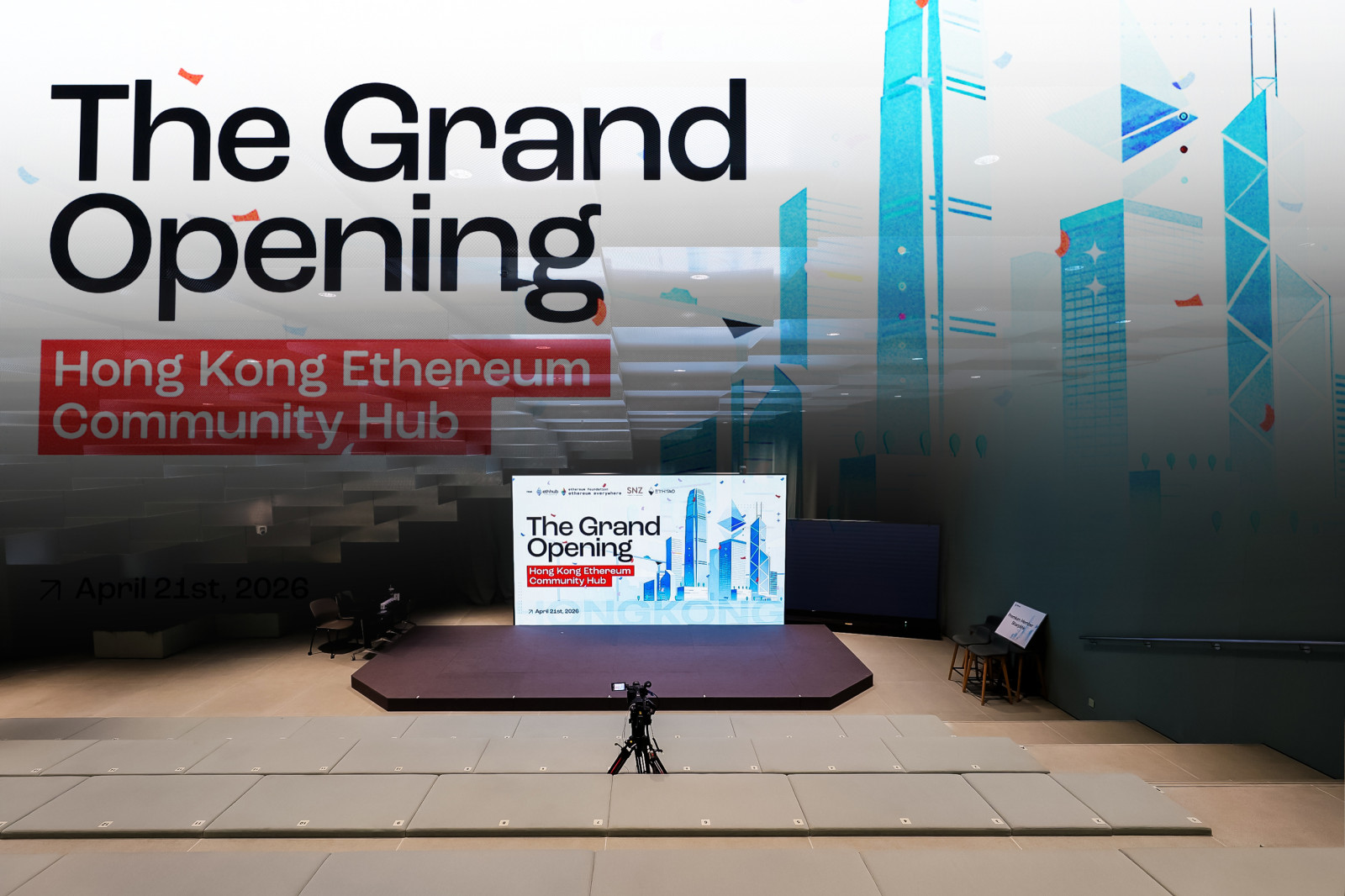
The Hub is designed as a platform for Ethereum ecosystem participants across Asia and around the world to connect, exchange ideas, and learn, with the goal of driving real-world application and development across all industries.
During an interview, Sharplink CEO Joseph Chalom said: "Ethereum's next chapter is being written in Asia. Hong Kong has built one of the most developed regulatory frameworks for digital assets anywhere in the world. The Stablecoins Ordinance, the SFC's virtual asset licensing infrastructure, and the sustained commitment from institutions in this market are not signals to monitor from a distance. They are signals to act on. "
The word "community" has become something of an eye-roll in this industry. It strikes me that, as an early Ethereum backer, SNZ chose to build just a "community" when the broader market is directionless. I sat down with Henry Chen from SNZ who led the Hub's operation, to find out why.
Web3's "Ancient Ritual"
The first question was the obvious one: why in this organizational form, which sounds unimpressive by the first look?
"Upon joining SNZ, I asked Gilles (Founder of SNZ) the exact same question," said Henry. "What I came to understand over time is probably the best answer anyone can give."
In the early days of development for DeFi applications on Ethereum, many projects were supported through a similar platform by SNZ. Around 2018, SNZ ran a community space in Shanghai called Neutrino, helping emerging projects build mindshares across the region, including MakerDAO the earliest DeFi project, was benefited — gaining traction across the local community across APAC, resulting to become a key foundational pillar in the Ethereum ecosystem.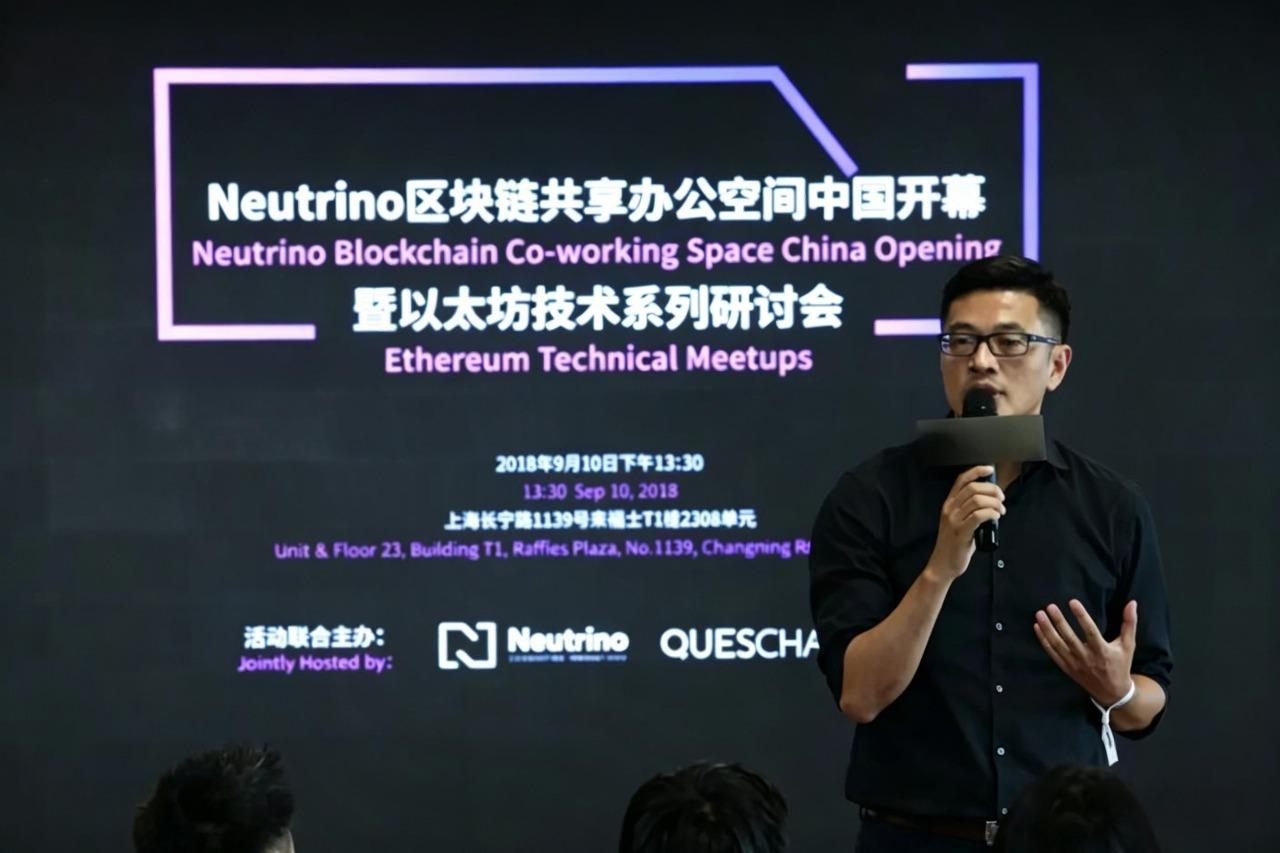
Henry spoke from personal experience. Before entering Web3 space professionally, he felt the industry somewhat illegitimate, not until speaking to Gavin Wang, Managing Partner and CIO of SNZ, who seemed to represent a fundamentally sound community, did he come to see the lights of the tunnel for Web3. The issue, as he described it, was too much noise which at the time was dominating and dictating the industry, and distracted even seasoned financial professionals like Henry.
"The industry was chaotic. Most of the time, you couldn't find the right people or “ordinary” people to even have meaningful conversation with." The state of chaos, as Henry explained, was due to the nature of the Web3 industry: on the one hand, Web3 was still in its early-stage; on the other hand,its decentralized nature meant that many projects from the moment (they were) born operate freely across the globe. They were unconstrained by geography as long as there was a network. Not every contributor or project member sits within the same organization or company, which means community is both needs and necessity .
"The reason you're skeptical about the concept of “Community Hub” is probably because 'community' has been demonized," Henry said. "Nowadays “community” is commonly known by a group of retail speculators and KOLs shilling for token prices, which is a very narrow and distorted version of “community”. Community to us includes everyone with a genuine interest in Web3 application and development, including those existing builders and participants. Talent groups will be fragmented without community. People and ideas will be disconnected, while the community can bring together people with mindshares. More importantly, such a community could, under a decentralized model, help build industry consensus, shape the direction of the industry, and ensure that the right voices are heard by more people.."
Indeed. Unarguably, since late 2022 we haven’t seen many genuine product breakthroughs for both real applications or even narratives in the Web3 industry. There is not much eye-catching innovation. A core issue among all is that many people have simply stopped thinking critically, but instead they spend more time trying to follow Trump’s tweets or fights on X between two KOLs. Real insights get flooded by such an avalanche of noise.
The concept of “Hub” was already proven successful model by Silicon Valley and Beijing's Zhongguancun (中关村) from the early years, with incubators such as Plug & Play driving forward the technological innovation and industry development, and eventually giving rise to companies like Google and ByteDance.
Some believe ancient civilizations reached interstellar travel before disappearing overnight. If physical communities and face-to-face dialogue still matter after billions of years, then their value must be undeniable.
Together, we stand like fire; Apart, we shine like stars.
“The value and meaning of Hub are hard to measure,” Henry said. “Many innovations are initially overlooked and pushed to the margins, but what becomes mainstream in the future often begins as something marginalized.”
The Hong Kong Ethereum Community Hub led by SNZ is not a generic crypto hub, but focuses on the Ethereum ecosystem. Among numerous blockchain infrastructure projects, only Ethereum has developed from a handful of believers to the largest blockchain network and community in the world and largest digital asset only second to Bitcoin. SNZ's conviction is that the next disruptive blockchain innovation as brilliant as DeFi will take place on Ethereum.
It’s not that all other blockchain protocols are obsolete, but just that Ethereum has a deeper and more established foundation.
It seems like the Hub is built to advance Ethereum development, without a doubt. But what about actionable points near term?
Henry raised simple examples Firstly, the Hub will serve as a public stronghold — the Whitepaper Reading Club has already reached out to request using the space for regular whitepaper reading sessions. In an industry where most interaction has moved online, in-person gathering is something the ecosystem quietly but genuinely needs.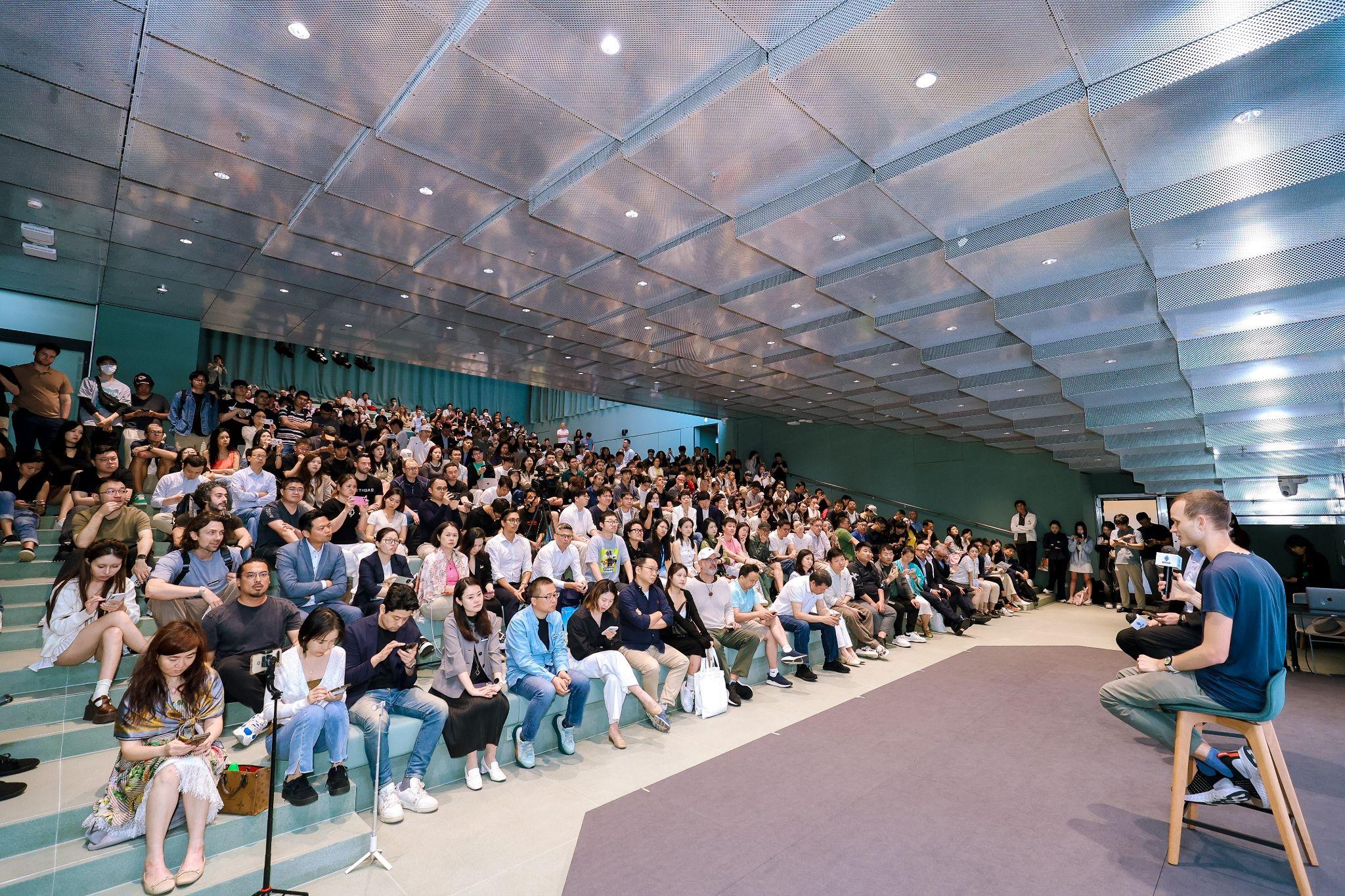
For the digital nomads, the Hub can serve as a “second home” for stop-by, work, meetings, or events. For projects and companies looking to establish local presence in Hong Kong, the Hub also offers localization support ranging from company incorporation, human resource, to introduction of banking service or even legal referrals.
Henry noted that dozens of companies, financial institutions, and Ethereum ecosystem projects have already resided in the Hub as Member, with a few even successfully set up Hong Kong franchises. "There will be 50 more, maybe 100 more. These members can connect with each other through the Hub, find potential business partners, and help entrepreneurs with the ideas find their co-founders. We also want to aggregate external resources and channel partners to provide full-spectrum support to the Hub ecosystem — whether it’s about capital, technical, or professional services, with some to be facilitated by SNZ while we hope to see this eventually becoming a joint effort among all keen members and partners."
None of this is headline-grabbing, but these are persistently real needs. As an evergreen investment firm, SNZ understands what it needs, and more importantly, what founders need. Great ideas rarely emerge from working in isolation. They tend to ignite through unexpected chemistry between people in the same room. The Hub is to connect talents with mindshares to spark the collision of ideas, providing the infrastructure and foundational services for Go-to-Market, while creating a network for these companies to develop future incubation ideas.
As Henry said, what the Hub can bring is not quantifiable through token price or ROI, but past success has given merits to this approach.
What's Going On with Ethereum?
"At Neutrino, a co-working space supported by SNZ in the early days, there were quite a few success stories," SNZ Community Manager Leo told me. "The reason we remain committed to Ethereum — and are building an Ethereum-specific Hub — comes down to something fundamental: Ethereum is the only truly censorship-resistant, privacy-preserving, open-source platform at this scale."
Ethereum's influence is actually far broader than most people appreciate. On the technical side, research driven by the Ethereum community on FHE (Fully Homomorphic Encryption) and ZKPs (Zero-Knowledge Proofs) has quietly made its way into applications across numerous domains — including iOS. But these advances, pushed forward by developers working largely out of the spotlight, rarely get the attention they deserve.
That foundation is why SNZ continues to back Ethereum — with conviction and with capital — committed to whatever might reignite excitement in Web3. Henry put it plainly: "Even though the Hub is Ethereum-focused, we are not biased towards any community or protocols. The Web3 ecosystem shouldn't be zero-sum — Ethereum's thrive doesn't have to come at the expense of other blockchain protocols. We'd rather grow the overall pie together. The industry has a long way to go beyond its current $3 trillion market cap."
Besides SNZ, there are countless people willing to champion Ethereum, but why hasn’t Ethereum in recent years been as eye-catching as people would expect?
Henry distilled the market disappointment into three aspects:
- More builders with combined knowledge of product, user and technicality is needed, or we need a platform connecting talents having these respective knowhows.
- People who are truly building great, long-term projects need a main stage to be heard, just as retail KOLs (Key Opinion Leaders) do.
- We also need to create stronger incentives for the community to stay committed to Web 3, while focusing more on the issues that matter to most people today and are directly relevant to their lives.
Ethereum itself hasn't fundamentally changed — it has continued along a roadmap forged through years of community deliberation. What shifted is the market's disposition. The 2021 cycle exhausted everyone's imaginative capacity for what Web3 could become. When the grand narratives and the billions of dollars capital commitments backing them began to unravel, people instinctively reached for short-term profit mindset to soothe the restlessness and yet egoistic heart. That panic-driven, scattershot mindset is what led Web3 off-course. What SNZ hopes to accomplish through the Hub is straightforward: bring credible voices back into the mainstream conversation, and help Web3 find its footing again.
"Blockchain isn't a wholly new invention, and cryptography has been around for decades," Henry said. "At its core, blockchain and smart contracts solve a trust problem — just as Alibaba.com served to solve the 'delivery or payment ' problem in global wholesale markets over 20 years ago. Strip away the jargon, and DeFi is just an advanced P2P (Peer-to-peer) finance. P2P itself isn't inherently problematic — but when it was dictated by unchecked greeds jeopardizing the trust system, the damage was severe and hard to reverse. Blockchain's trustless consensus mechanism closes that gap, which is what made something like MakerDAO possible at that scale."
What Ethereum may need now is new ideas unconstrained by its own history. Speaking at the Hub's Grand Opening & Meetup, Ethereum Co-Founder Vitalik Buterin framed it this way: "I encourage everyone to ask: what does the world really need right now? The answer doesn't have to involve only Ethereum — it might be Ethereum combined with something else entirely. Hong Kong’s neighboring city Shenzhen has a thriving platform for open-source hardware. There's a wave of specialized AI, including tools focused on music. All of these are things builders can combine and build on top of. I hope people start working on projects that look completely different from what was being built on Ethereum three years ago."
A Historical Inflection Point
"It is an unfair and flawed understanding when people critique the Ethereum Foundation for not prioritizing user experience and product adoption in the last two years," said Henry. "The role of the Ethereum Foundation shouldn't be like the management team forEthereum. Their mandate is technical research and developing the long-term infrastructure solutions to make the network more sustainable and scalable. It is the broader community to develop use cases, products, and applications. Furthermore, the opportunity set extends well beyond financial applications such asAI-related, digital content, and other verticals etc."
This view closely mirrors the rationale a16z articulated when it recently announced plans to raise $2 billion in continued bets on pure blockchain infrastructure. Leo added: "Ethereum's work on privacy and related technologies may not generate imminent wealth effects that tend to capture market attention, but it is a necessary condition for blockchain to achieve mainstream-scale adoption. We're not narrowly commercially focused — we hold in high regard every contribution Ethereum makes across the full spectrum of society."
Leo also emphasized that the Hub is not exclusively for crypto-native companies. Ethereum's potential applications span far beyond any single vertical, and the Hub is open to any individual, company, or organization interested in understanding and contributing to Ethereum's development.
Alsa, which aims to natively embed payment capabilities into every AI agent calls, has also recently joined the Hub as member. Its founder told me the goal is to contribute real use cases, infrastructure, and large-scale agent usage data — helping move the ecosystem from concept to reality.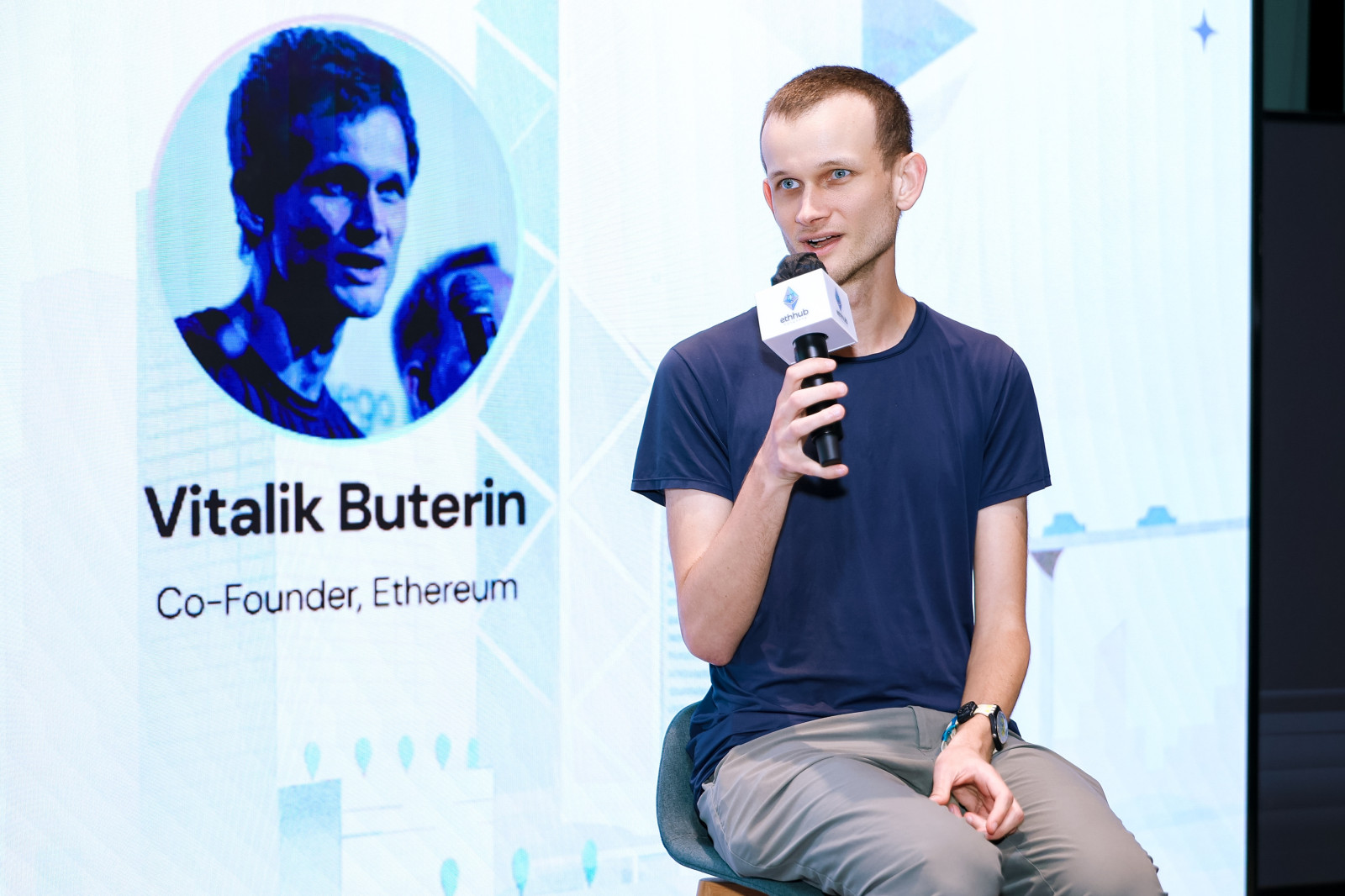
The Hub's opening also came as the broader Hong Kong Web3 Festival hit its stride. The week's standout moment came when prominent economist Fu Peng delivered his first public address of 2026 at the festival and officially announced he was joining Xinghuo Group (New Fire Group).
The Web3 industry's relationship with Hong Kong is a love-hate one — appreciation for having a jurisdiction willing to serve as a real-world testbed for digital assets, mixed with frustration that after years of positioning, the tangible output has often fallen short of expectations. When I raised this with Henry, he responded with the question that opens this piece.
"The US and China represent the two dominant markets for tech innovation, fintech, and Web 3. It is an obvious choice when the Hub anchors in Asia, Hong Kong is chosen as a base with stable capital markets and a clear regulatory framework," Henry said, with confidence. "My view is that Hong Kong's potential is still significantly underestimated."
In his remarks at the festival, Fu Peng said he feels the moment he's entering Web3 may mark a genuine historical inflection point. At this juncture: SNZ has launched the Hub; a16z is preparing to deploy another $2 billion into the sector; blockchain is beginning to meaningfully penetrate and reshape traditional finance; and a cohort of builders continues pushing the frontier of native Web3 applications.
Looking back a few years from now, we may all find we were standing at this inflection point — some already in motion, some just getting started, some still on the fence. The best time to plant a tree was ten years ago; the second-best time is today. A decade ago, Ethereum was only beginning to reach a wider audience after years of quiet, earnest community-building. Today, those building the Hub are ready to walk that road again. Over the past decade, the people who came away with the biggest results did so because they believed in something — not because they timed a trade.
Web3 is not as exotic as outsiders imagine. Everyone in it lives the same human story — the same hopes, fears, and mortality. But it's not as simple as it looks from the outside, either. The nature of decentralized projects and the organizational models they require make everything harder to predict and control. Nearly twenty years into this experiment, the market's attention has shifted constantly. But Web3's core hasn't changed — just as, across millennia of recorded history, human nature itself has not.
When the noise insisting that "Web3 has already changed beyond recognition" becomes deafening, the investors who were present for Ethereum's rise have chosen to carry the mission forward the most time-tested way they know. This is not a step backward. It's the instinct of those who know how to read the tide: every wave brings something in and takes something away — but the real treasures were never on the surface to begin with.